#CLSTR
What if you could own a fragment of one artwork?
Usually, taking a piece from an artwork would destroy the whole. CLSTR begins with the opposite idea: an artwork created to exist in parts. 10,000 fragments can separate, travel and change hands — while remaining one work.
One artwork. 10,000 fragments.
10,000 gestures
How do you make 10,000 fragments without simply reproducing the same object?
By hand.
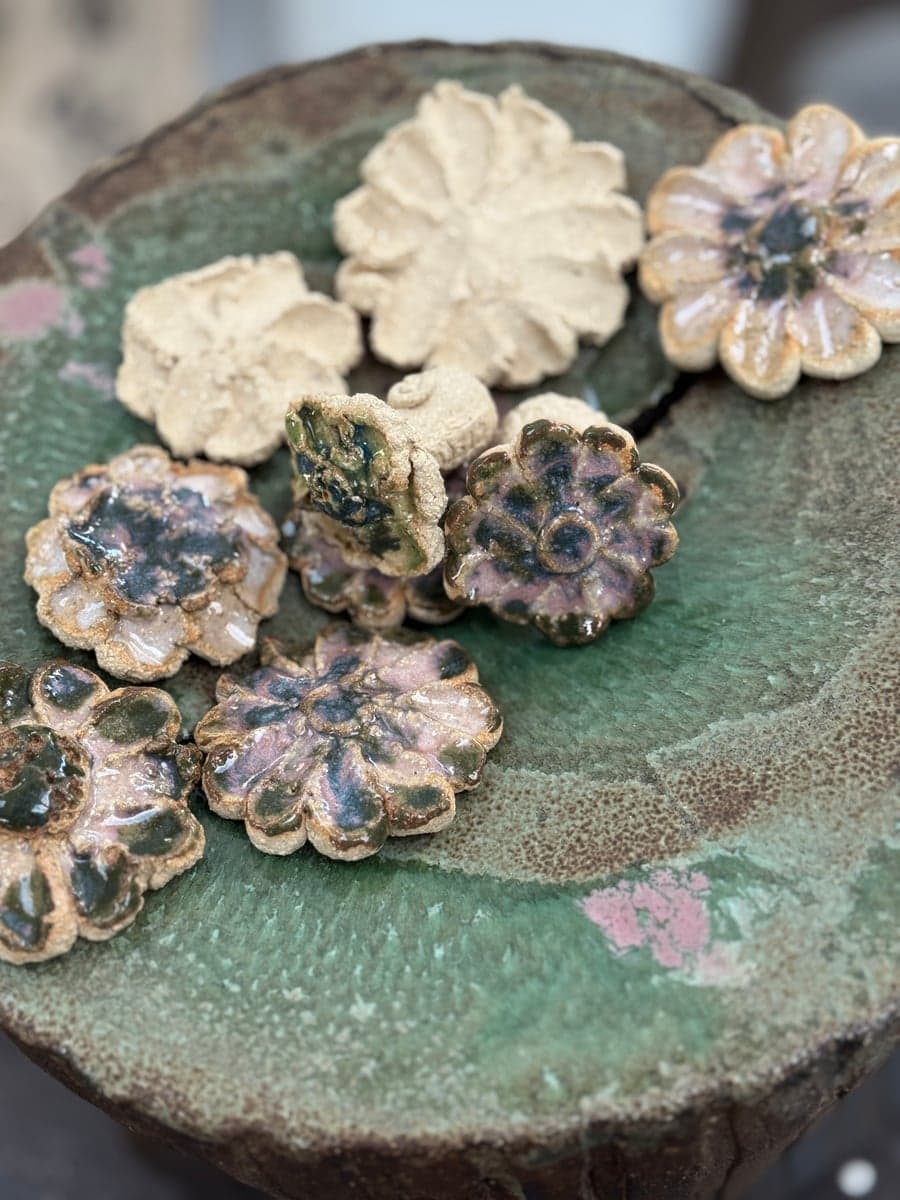
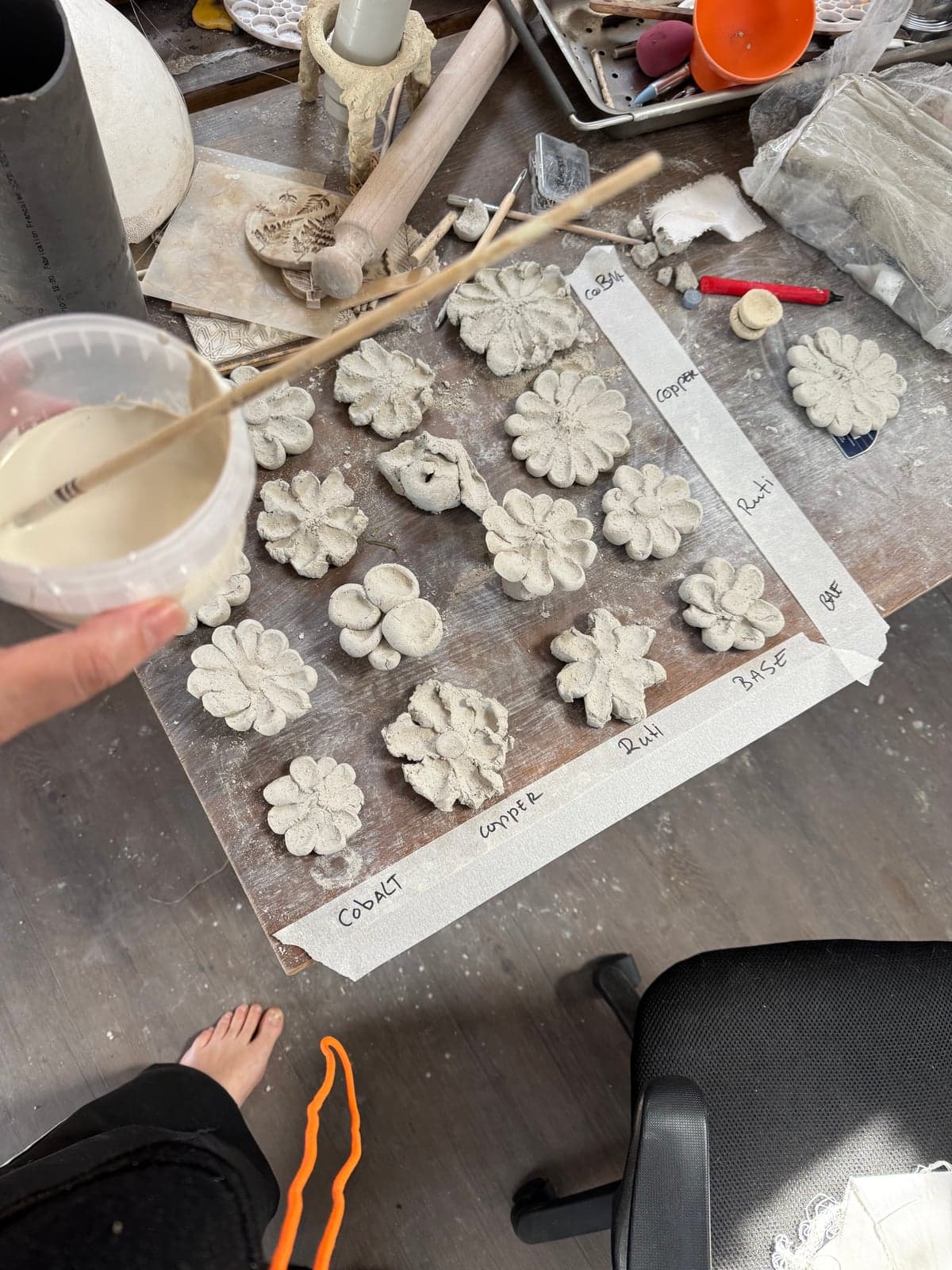
Not the same gesture copied 10,000 times, but the same act repeated: taking clay in my hands and making a mark.
Each fragment begins with a gesture — my movements, my proportions, my fingerprints. Deliberately imperfect, never smoothed over. Each fragment carries time, attention and touch.
Repetition creates difference. My hands change. The clay responds. The gestures evolve.
Today, many of them look like flowers. I don't know what gesture number 9,999 will look like.
Physically apart. Still one work.
Some fragments are collected and live in people's homes. Others are placed in public space, using abandoned holes, screws and fixings already there.
Once a fragment leaves my studio, I don't necessarily know where it will eventually end up. Yet it never becomes a separate artwork.
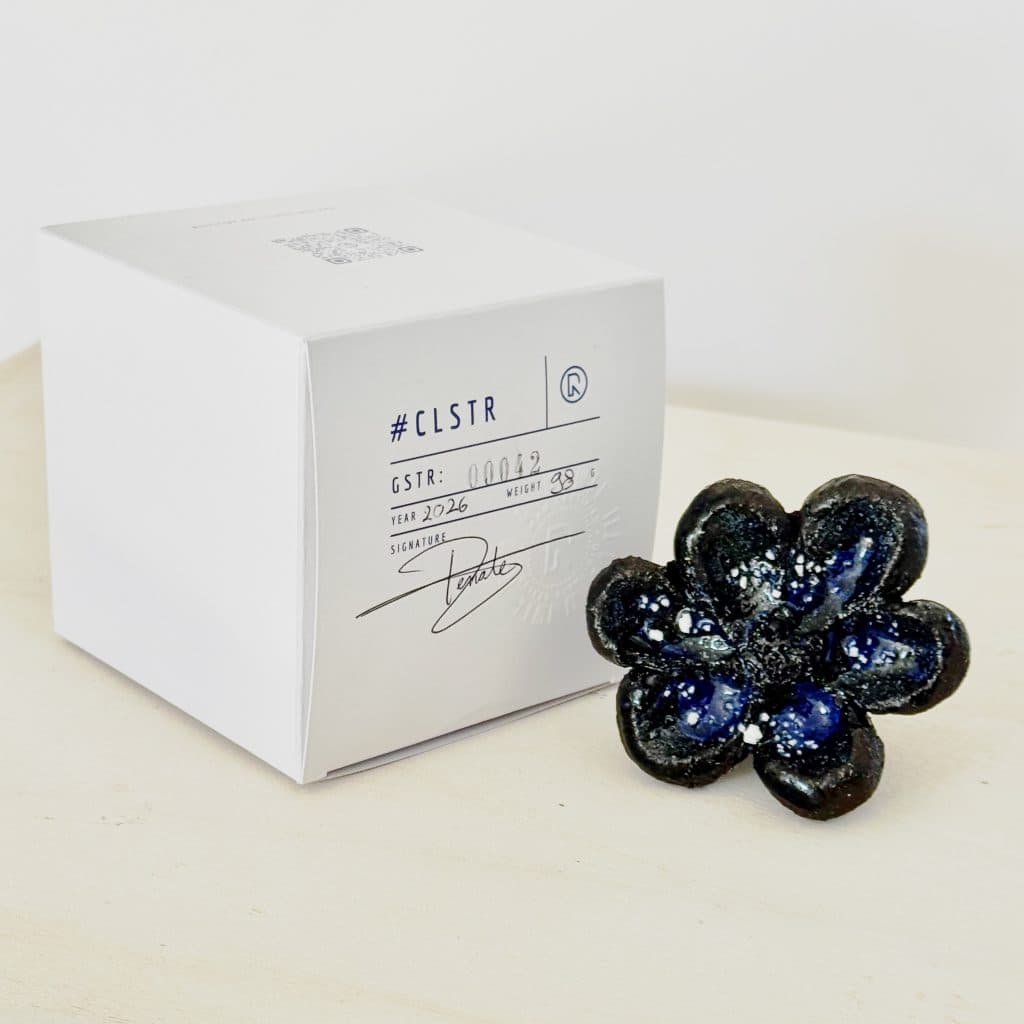
Every GSTR is numbered, documented and 3D-scanned.
As CLSTR grows, seeing the entire physical work together becomes impossible. The digital archive keeps track of the fragments and will eventually bring all 10,000 together again — digitally. Not to replace the physical work, but to make the whole visible.
Become part of CLSTR
A fragment can become yours without becoming a separate artwork.
You can live with one, bring several together, move them or pass them on.
Wherever they go, they remain part of CLSTR.
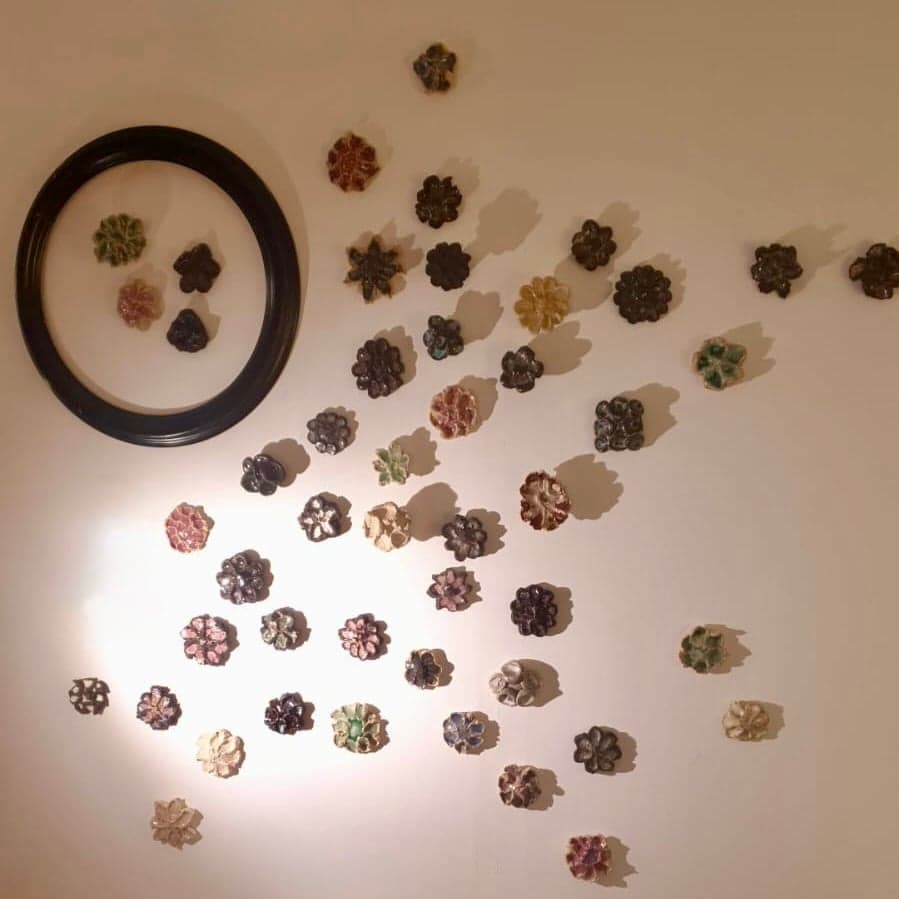
One artwork. 10,000 gestures. Many places.
#CLSTR